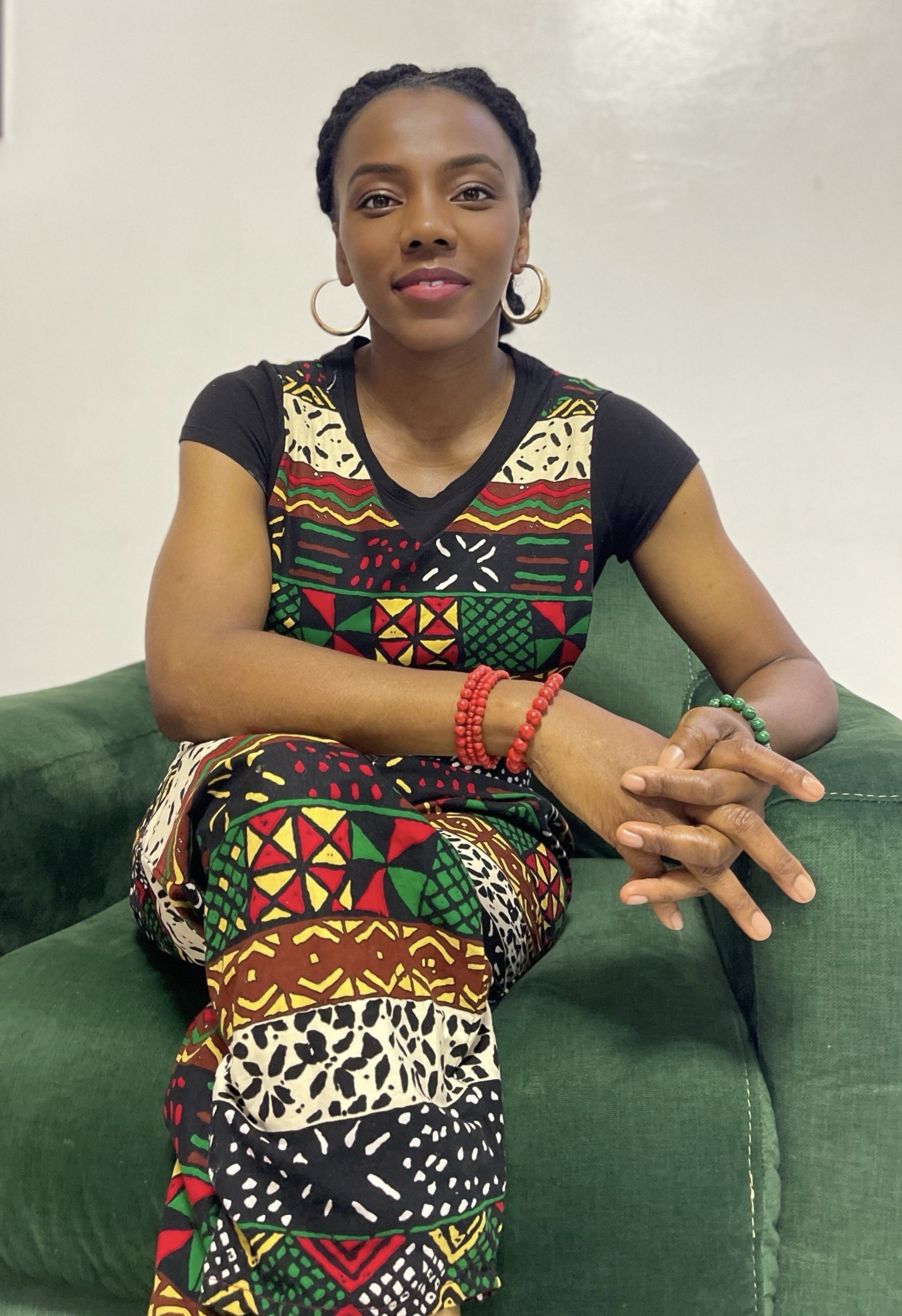


Historian of Medicine,
Health Advocate,
Maternal and Reproductive Health Researcher
My passion for medicine dates to my childhood, perhaps because my maternal grandfather was the village dokinta and my grandmother the de facto community midwife. I was always interested in my grandfather’s community practice and grew up surrounded by community medicine texts. By the time I was ten and ready to head off to junior high school, I had firmly embraced my passion for the health professions. Two years before graduating high school, however, I made the decision to move my specialty, which we chose at the end of junior high, from the Sciences to the Humanities for reasons of health-related absences that meant I’d miss too many physics and chemistry labs to catch up. I graduated as the top Humanities student in the school’s West African certificate exams and proceeded to pursue History and International Studies for my first degree, following some uncertainty about my path forward as a former Science student in the Humanities.
As a historian, my passion for medicine and medical literature did not diminish. However, this passion now had a companion, Women's Studies, a field that I was drawn to because of the silences and mischaracterizations of women’s roles that became increasingly evident throughout my college years. With this pull of medicine and women, I immediately enlisted for training, upon graduation, to work in a federal initiative that addressed reproductive health and HIV/AIDS among women and girls. This journey solidified my path into maternal and reproductive health research.
In the course of this federal program, I met young mothers – many of them teenagers- facing varying types of obstetric trauma, some inflicted by cultural practices and others the plain result of their youth. I was struck by the gap between health policies in this region and the girls’ lived realities, colored by culture and religion. At the same time, I saw how grassroots engagement, when rooted in historical awareness, could transform communities. My experiences in this project left a lasting mark and shaped my postgraduate pursuit in the history of medicine, with the primary goal of using historical research to deepen our understanding of maternal and reproductive health.
Since my participation in the reproductive health program, I have explored the social, cultural, religious, and political forces that shape women’s experiences of birth and the layered contexts in which maternal deaths occur. My first monograph, Birth Politics: Colonial Power, Medical Pluralism, and Maternity in Nigeria, examines the intersections between culture, faith, medicine, and birth in colonial and post-colonial Nigeria. My second monograph examines the contemporary crises of maternal deaths in Nigeria as mired in a long history of cultural practices, political structures, and economic landscapes. Other research projects revolve around medical activism, wartime medicine, and indigenous knowledge systems.
As an African(ist) researcher raised on the continent, trained in North America, and actively teaching Black maternal health, I bring a unique vantage: I have witnessed reproductive care in West African settings and experienced birth firsthand as a mother in America. My scholarship is informed by medical activism and advocacy, work that I advance through teaching, research, public speaking, and public engagement. As cofounder and executive director of African Health Awareness Network (AHAN), I collaborate with a coalition of experts to translate decades of research into grassroots initiatives that advance health education.
I graduated Summa Cum Laude from the Department of History and International Studies, University of Nigeria, Nsukka, and obtained my doctoral degree in History alongside a doctoral portfolio in African and African Diaspora Studies from the University of Texas at Austin.
Prior to my tenure as an Associate Professor in History at the University at Buffalo, I was an Assistant Professor of African History and History of Medicine at Creighton University, with joint appointments in the Department of History and Department of Medical Humanities. I was also Creighton’s Director of African Studies and focused in this capacity on building an inclusive campus community through the program’s academic and community-based event.
“The past shines a light on the
present and the future, always.”
— Dr. Ogechukwu Williams
Awards & Recognition


The Funmilayo Ransome-Kuti Prize for Distinguished Public Activism and Service, UT Austin, 2025


Kingfisher Scholarship and Research Fellowship, Creighton University, 2020-2021


Service to the Profession

Advisory Board, Society for the Study of Pregnancy and Birth
Consultant (Africa), DK Publishing
Mentor, Lagos Studies Association Women’s Mentoring Network
Editor, Bloomsbury History: Key Thinkers, 2020 to 2022
Board of Editors, Undergraduate Journal of Black Business History, 2016-2019